

Humans have already landed on the Moon six times. So why have we not gone back in the past fifty years? Let’s explore the reasons behind this long pause in lunar exploration.
There are many questions people ask about the Moon, and this one in particular is something I have been asked countless times. Sometimes it comes from genuine curiosity, a desire to understand why human exploration of our satellite was put on hold. Other times (unfortunately) it arises from unhealthy conspiratorial impulses. In any case, the key point is understanding how modern research works and ,especially, how it is funded.
The Apollo programme
The Apollo programme, which took humans to the Moon between the late 1960s and early 1970s, was not the only major investment in space exploration. In other words, it was not the only project that required enormous resources. The entire programme cost 28 billion dollars at the time. Adjusted for inflation, this corresponds to roughly 150–250 billion euros today, about the cost of ten annual budget laws for a country like Italy.
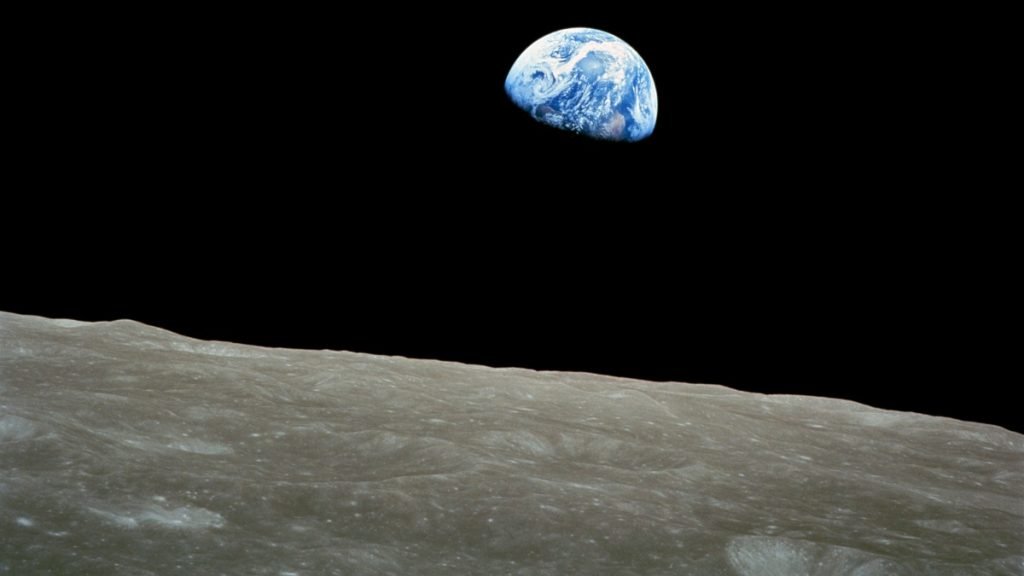
Apollo ended in the early 1970s, and many other projects followed, including two with comparable or even greater costs: the Space Shuttle programme and the International Space Station.
The Space Shuttle programme
The Space Shuttle programme was already being designed while Apollo was still under way. It began on 12 April 1981 with the launch of Columbia and ended on 21 July 2011 with the landing of Atlantis. Among its many achievements, far too many to list here, were the development and operation of Spacelab, a reusable laboratory for microgravity experiments; the construction of the International Space Station; and the deployment and maintenance of numerous satellites and space telescopes, including the Hubble Space Telescope, whose scientific impact is well known.
All of this came at a total cost of around 200 billion dollars, potentially even higher than Apollo.
The International Space Station
Construction of the International Space Station began in 1998, made possible precisely by the Space Shuttle (the only spacecraft capable of carrying its main modules into orbit). The ISS is still operational today. Its ultimate purpose is to develop technologies for long‑duration spaceflight, support a research laboratory in microgravity, and enable experiments in physics, biology, chemistry, medicine, and meteorology. In short, it is a unique environment that pushes forward research and technological progress across many scientific fields simultaneously.
This programme also required a major investment, around 160 billion dollars, comparable to Apollo and the Space Shuttle.
So why didn’t we return to the Moon?
All of this makes it clear why humanity did not return to the Moon after the early 1970s: major costs require major motivations. After six landings, which brought back 382 kg of lunar samples, what crucial scientific questions remained unanswered that would justify another very expensive series of missions? This was the essential question that needed a compelling answer before committing to another big investment. And needless to say, the urge to appease the conspiracy theorist of the moment is neither a valid nor a serious justification.
Leaving aside the political context of the time and the safety standards that would be unacceptable today, pouring vast sums into new lunar missions would have meant much less funding for the two major programmes just described. And on top of that, many other satellite and probe missions, which later became historic successes, could not have operated (or, at the very least, would have been delayed substantially): the Pioneer probes (first flybys of Jupiter and Saturn in 1973), the Mariner missions (first flybys of Venus and Mercury), the Voyager probes (first flybys of Uranus and Neptune in 1977), the Viking landers (first successful images from the Martian surface), the already‑mentioned Hubble Space Telescope, and other Earth‑orbiting observatories such as the Chandra X‑ray Observatory.
All of these missions also required substantial investment, so a choice had to be made: either these, or more Moon landings. Needless to say, and the discoveries made since then fully support this view, it now seems clear that the right choice was made.
And in the meantime, the Artemis programme is moving forward.


